
The Great Information Devolution: Why We’re Losing Focus, and What We Can Do About It
A newsletter that explores how the digital world is rewiring our brains, overwhelming us with information, and reshaping how we think.

🕒 Read time: 2 minutes
Welcome to the first edition of The Great Information Devolution newsletter!
I’m Jack Brewster, CEO of Newsreel and editor at NewsGuard. I’ve spent a decade researching how the internet has transformed the way we think and engage with news. This newsletter is a place to explore how the design of our digital devices is rewiring our brains, making us overwhelmed, misinformed, and often, more divided.
Each week, I’ll explore how our digital environments are shaping the way we think— from attention spans to misinformation to how we consume news. Together, we’ll break down the science behind digital distraction and explore strategies to reclaim our focus in an age of information overload.
Why I started this newsletter:
Growing up with ADHD, I struggled with focusing on traditional reading. My brain craved fast information and quick stimuli—something I later saw happening to everyone around me as digital devices took over.
During my time as a journalist, I witnessed a shift: people were reading my articles for seconds, not minutes. This left me asking, “Why?”
The answer lies in the way our phones, apps, and online spaces are designed to harvest our attention — rewarding clicks, likes, and shares over depth and accuracy. The Great Information Devolution will explore these ideas each week.
I want to share with people the subtle yet profound ways that digital design is shaping our thoughts, behaviors, and focus. (P.S. It’s also the reason I started Newsreel, a news company designed to help people cut through the noise and engage with news in a way that works with your brain, not against it.)
What Is the Great Information Devolution?:
The idea is simple: while we once thought the internet would make us smarter and more connected, it’s actually fragmenting our focus and reducing our ability to understand complex ideas.
With each ping, notification, and viral meme, we’re slipping into a cognitive state where surface-level engagement replaces deep thought.
Some disturbing stats for you to ponder:
46 notifications: That’s the average number of alerts U.S. smartphone users receive daily. Teens? Over 200.
143 minutes: That’s the average amount of time each of us spends on social media daily — nearly 2.5 hours of scrolling and sharing.
47 seconds: That’s the average screen attention span, down from 150 seconds in 2004, according to research from the University of California, Irvine.
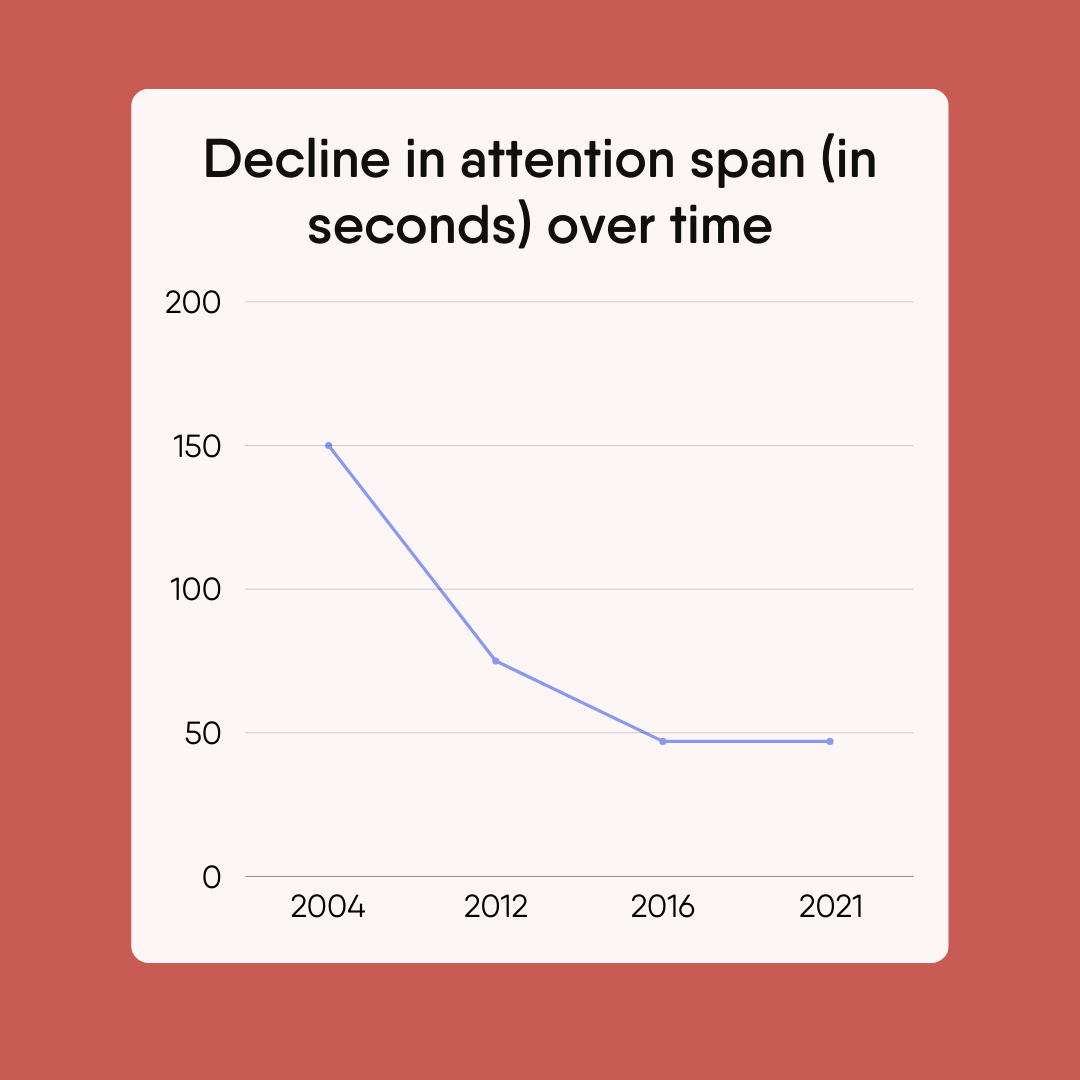
The digital world we live in is designed to pull us in every direction, and it’s impacting how we think, engage, and focus. But we can take back control. This newsletter will be a guide, helping you navigate these forces with practical strategies for reclaiming your attention.
Thanks for joining me on this journey. Stay tuned for the next edition to be published next Monday.
Cheers,
Jack